Locomotive & Train Specifications Database
Technical data for 10,492 locomotives, multiple units, trams and railcars from 995 manufacturers: top speed, power output, weight, dimensions, track gauge, operators and photos.
Browse by type
Fastest trains in the world
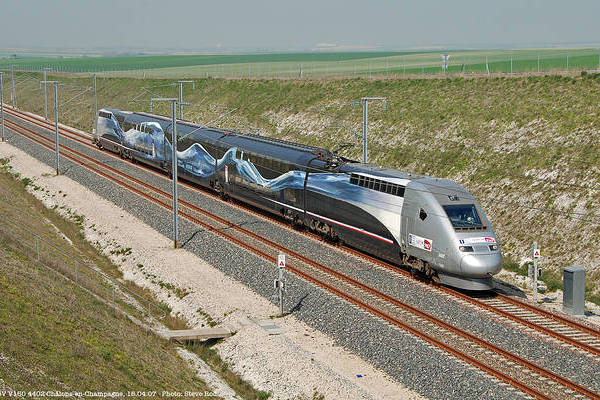 #1 · 575 km/h
Alstom
TGV 384000 V150
Electric multiple unit
2006 · 575 km/h
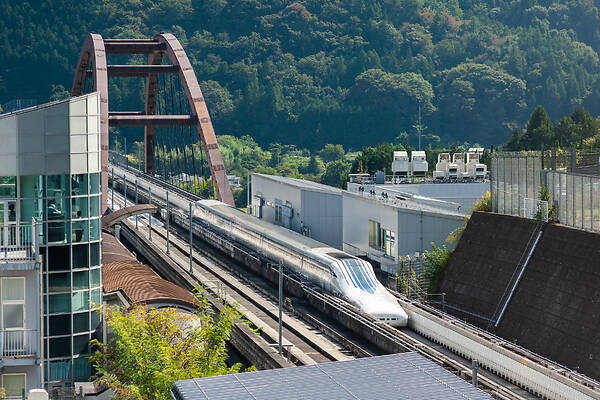 #2 · 550 km/h
Mitsubishi
L0 Series
Electric multiple unit
2011–2020 · 550 km/h
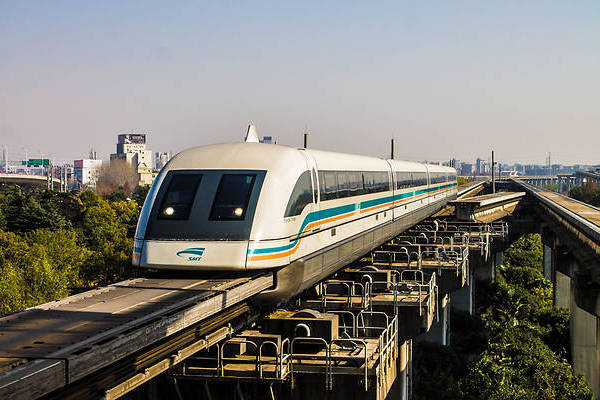 #3 · 500 km/h
Siemens
SMT Transrapid
Electric multiple unit
500 km/h
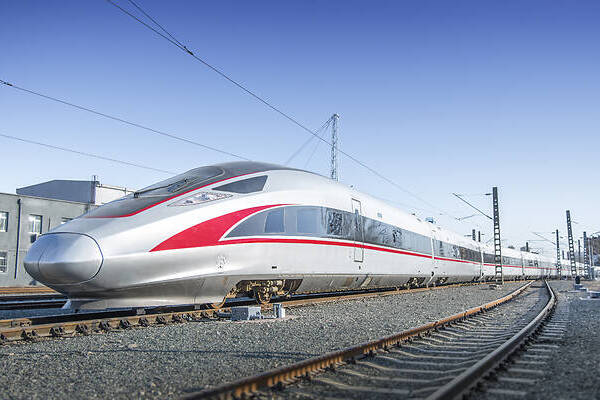 #4 · 400 km/h
CRRC Qingdao Sifang
CR400AF
Electric multiple unit
2016 · 400 km/h
 #5 · 400 km/h
CRRC Changchun Railway Vehicles
CR400BF
Electric multiple unit
2015 · 400 km/h
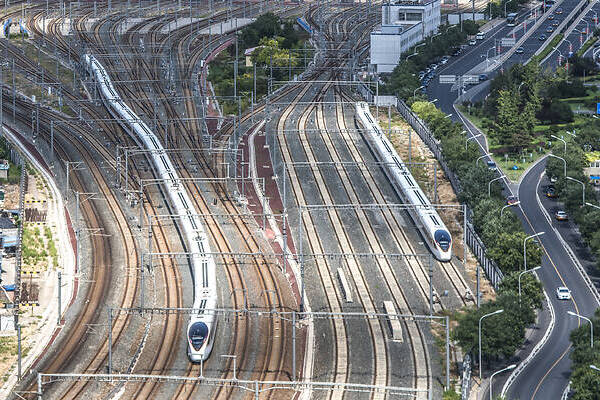 #6 · 400 km/h
CRRC Changchun Railway Vehicles
CR400BF-B
Electric multiple unit
2019 · 400 km/h
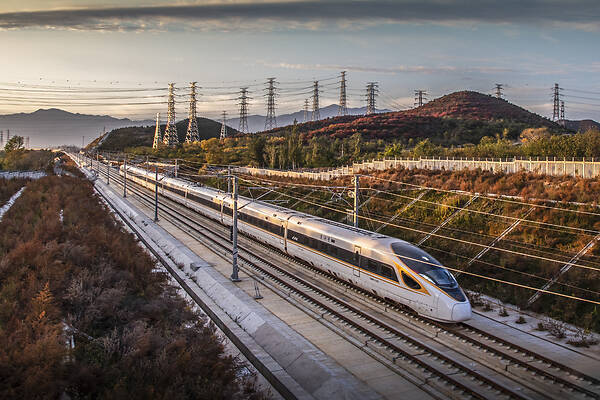 #7 · 400 km/h
CRRC Changchun Railway Vehicles
CR400BF-G
Electric multiple unit
2019 · 400 km/h
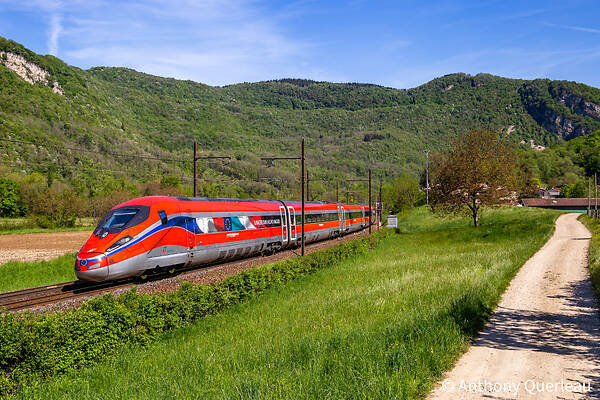 #8 · 400 km/h
AnsaldoBreda
Frecciarossa 1000
Electric multiple unit
2013 · 400 km/h
Records & rankings
Major manufacturers
Manufacturers by country
A reference database for rolling stock
Locomotive-Specs.com gathers the technical data of more than 10,000 locomotives, multiple units, trams and railcars in a single, consistent format. Each model has its own spec sheet with its top speed, power output, weight, dimensions, track gauge, axle arrangement, electrification systems, years of construction and the railway companies that operated it.
The database covers almost two centuries of railway history, from the first steam locomotives of the 1830s to the latest hydrogen trains and high-speed trainsets. You can browse it by manufacturer, by type of vehicle or by country, or jump straight to the records and rankings.
All values are shown in metric units with their imperial equivalents, so that you can compare a North American diesel locomotive and a European electric multiple unit at a glance.
How to read a spec sheet
- Top speed
- The maximum speed allowed in service, in km/h and mph. Record runs are sometimes higher: the TGV V150 reached 574.8 km/h in 2007 on a specially prepared line.
- Power output and tractive effort
- Power (kW or hp) determines how fast a train can climb and accelerate at speed, while tractive effort (kN) is the pulling force that lets a locomotive start a heavy train. See the glossary for details.
- Axle arrangement
- Codes such as Bo'Bo' or Co'Co' describe how the axles are grouped and which ones are powered. Steam locomotives use the Whyte notation instead, for example 4-6-2 “Pacific”. Learn to decode them in our glossary.
- Track gauge
- The distance between the inner faces of the rails. Most of the world uses standard gauge (1,435 mm), but Russia, Spain, India, Japan and many narrow-gauge lines use other values. See track gauges.
Frequently asked questions
What is the fastest train in the world?
The absolute speed record for a train is held by the Japanese L0 Series maglev, which reached 603 km/h (375 mph) in 2015. For conventional wheel-on-rail trains, the record belongs to the French TGV V150 with 574.8 km/h in 2007. In commercial service, the fastest trains run at about 350 km/h. See our ranking of the fastest trains.
What is the difference between a locomotive and a multiple unit?
A locomotive is a separate traction vehicle that hauls unpowered coaches or wagons. In a multiple unit, the traction equipment is distributed along a fixed set of passenger cars that can run on its own and be coupled to other units. Electric multiple units (EMU) and diesel multiple units (DMU) are explained in our train types section.
What does standard gauge mean?
Standard gauge is a track width of 1,435 mm (4 ft 8½ in), used by roughly 55 % of the world's railway lines, including most of Europe, North America and China. Wider tracks are called broad gauge and narrower ones narrow gauge.
Where does the data come from?
The specifications are compiled from public sources, mainly Wikipedia articles and railway enthusiast databases, and are cited on each spec sheet. Photos are shared by the trainspo.com community and remain the property of their authors. More details are available on our about page.
I found an error, how can I report it?
Please contact us with the address of the page, the value that is wrong and, if possible, a source. Corrections are usually published within a few days.